Surfacing Intelligence: A UX Transformation for HeyContext
Surfacing Intelligence: A UX Transformation for HeyContext
Complete redesign with new user flows to improve feature discoverability and creation of design system for scalability.
Complete redesign with new user flows to improve feature discoverability and creation of design system for scalability.


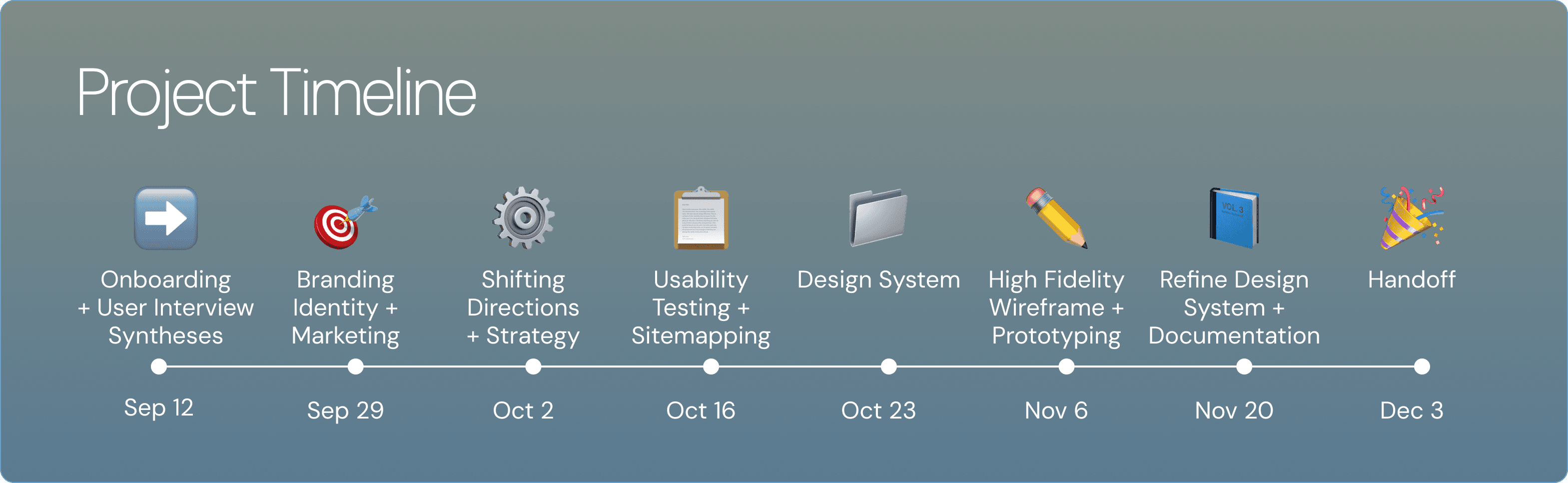
Timeline
Timeline
12 weeks (Sep - Dec 2025)
12 weeks (Sep - Dec 2025)
12 weeks (Sep - Dec 2025)
Team Members
Team Members
1 Product Designer, 2 User Researchers, and 3 Developers
1 Product Designer, 2 User Researchers, and 3 Developers
1 Product Designer, 2 User Researchers, and 3 Developers
My Role
My Role
Product Designer
Product Designer
Product Designer
PersistOS is a privacy-first startup that focuses on contextual intelligence. HeyContext is an Autonomous Work Platform that stems from PersistOS’ core technology and is at an early stage of product development.
The Challenge:
Market Repositioning: Product pivot to enterprise-facing demanded changes in UX strategy.
Critical Barriers to User Experience: Research revealed critical usability problems and feature discoverability gaps.
Limited Resources: With only 2 designers onboard working part-time, we had to allocate our efforts strategically.
We Delivered:
Design System: A solid foundation and UI component library embodying a refreshed brand identity, along with documentation to ensure intentional, values-driven design decisions and support future product scaling.
UX Restructuring: Reimagined user story and platform architecture; new user flow illustrated with high fidelity wireframes and Figma Make prototypes.
Results:
Company-wide presentation and high-fidelity prototype walkthrough received unanimous approval.
Redesign drove 1,000 users in the first 2 weeks and 60,000+ visits in the first month of launch.
PersistOS is a privacy-first startup that focuses on contextual intelligence. HeyContext is an Autonomous Work Platform that stems from PersistOS’ core technology and is at an early stage of product development.
The Challenge:
Market Repositioning: Product pivot to enterprise-facing demanded changes in UX strategy.
Critical Barriers to User Experience: Research revealed critical usability problems and feature discoverability gaps.
Limited Resources: With only 2 designers onboard working part-time, we had to allocate our efforts strategically.
We Delivered:
Design System: A solid foundation and UI component library embodying a refreshed brand identity, along with documentation to ensure intentional, values-driven design decisions and support future product scaling.
UX Restructuring: Reimagined user story and platform architecture; new user flow illustrated with high fidelity wireframes and Figma Make prototypes.
Results:
Company-wide presentation and high-fidelity prototype walkthrough received unanimous approval.
Redesign drove 1,000 users in the first 2 weeks and 60,000+ visits in the first month of launch.
Design Questions
How might we surface and translate complex AI generation capabilities into accessible and effective features serving users of varying technical expertise and professional backgrounds?
How might we integrate discovery, design, and delivery phrases in an agile startup environment while maintaining design quality and development momentum?
Design Questions
How might we surface and translate complex AI generation capabilities into accessible and effective features serving users of varying technical expertise and professional backgrounds?
How might we integrate discovery, design, and delivery phrases in an agile startup environment while maintaining design quality and development momentum?
Research
My work at HeyContext began by synthesizing insights from 9 baseline interviews with individuals of varying AI use that asked about their existing frustrations, expectations, and wishes for AI platforms.
Key Insights:
Repetitive and lengthy prompts create user friction.
"Writing long prompts again and again to provide context is frustrating."
Users desire proactive, anticipatory assistance.
“AI acting as a proactive assistant rather than a reactive tool would be a great improvement.”
Users would like it embedded in the actual workflow rather than something they have to go to.
From this, we also identified the following mental models:
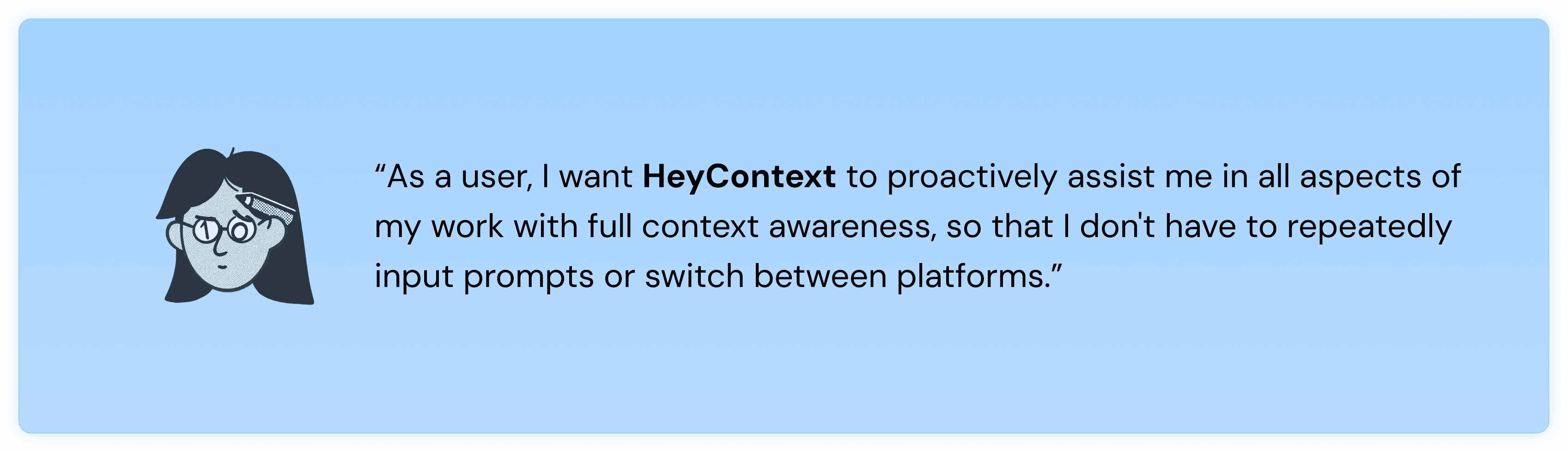
Ambient AI Agents: users expect AI agents to be autonomous, event-driven, and persistently context-aware such that no manual prompting is needed.
Outcome-focused: users’ evaluation of AI platforms is largely dependent on generation quality. Ideally, generated artifacts should match both the immediate user input and the larger context, uphold high accuracy and quality, while also allowing for rapid iteration.
Research
My work at HeyContext began by synthesizing insights from 9 baseline interviews with individuals of varying AI use that asked about their existing frustrations, expectations, and wishes for AI platforms.
Key Insights:
Repetitive and lengthy prompts create user friction.
"Writing long prompts again and again to provide context is frustrating."
Users desire proactive, anticipatory assistance.
“AI acting as a proactive assistant rather than a reactive tool would be a great improvement.”
Users would like it embedded in the actual workflow rather than something they have to go to.
From this, we also identified the following mental models:
Ambient AI Agents: users expect AI agents to be autonomous, event-driven, and persistently context-aware such that no manual prompting is needed.
Outcome-focused: users’ evaluation of AI platforms is largely dependent on generation quality. Ideally, generated artifacts should match both the immediate user input and the larger context, uphold high accuracy and quality, while also allowing for rapid iteration.
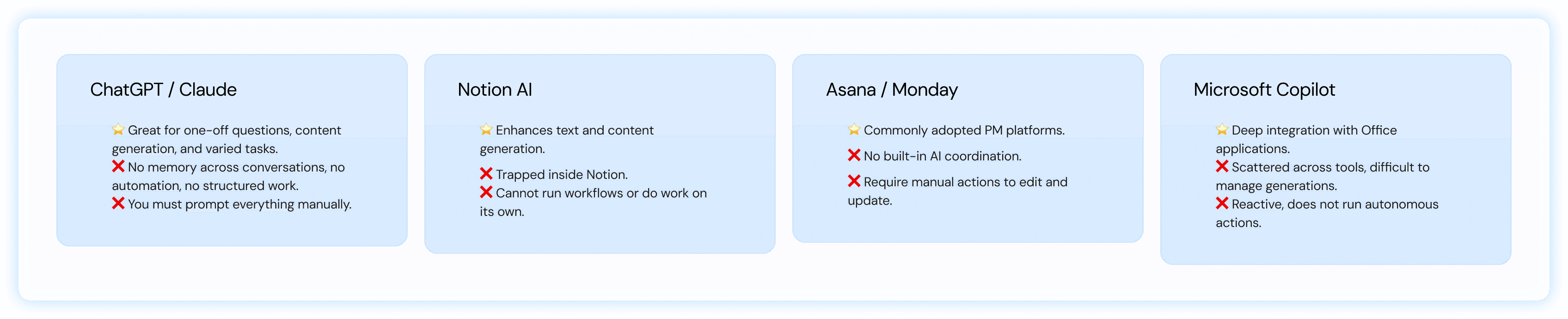
Through desk and market research, we also discovered the critical gap: no existing AI agentic product combines autonomous multi-agent coordination with persistent organization memory, structured deliverable generation, all the while without manual prompts.
Through desk and market research, we also discovered the critical gap: no existing AI agentic product combines autonomous multi-agent coordination with persistent organization memory, structured deliverable generation, all the while without manual prompts.
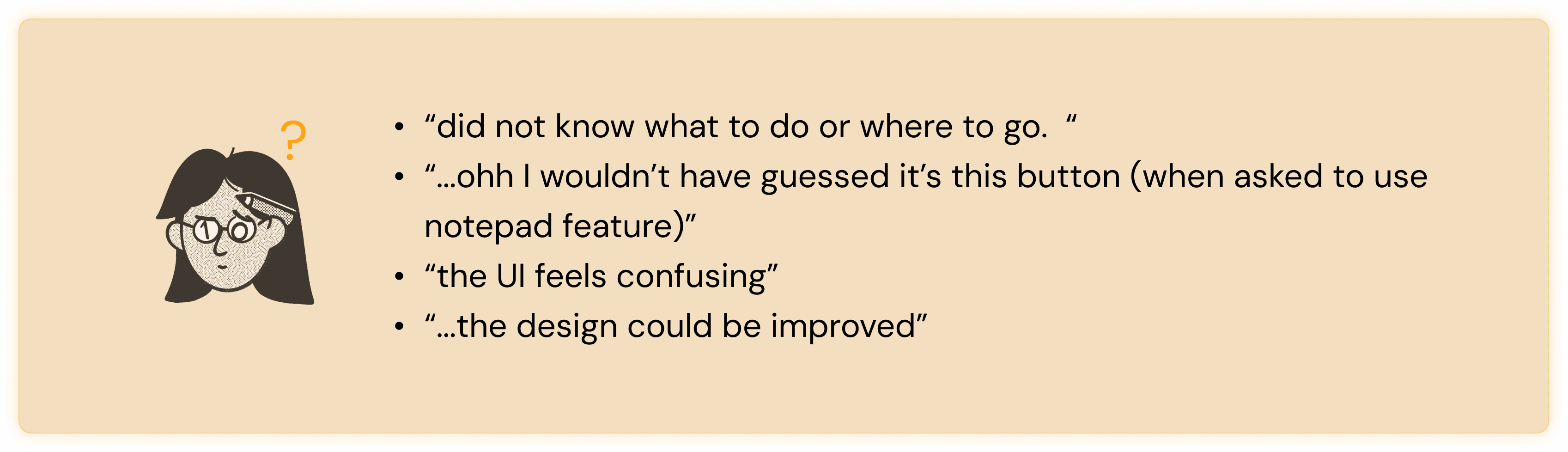
Early platform development focused on rapid feature delivery, with the interface generated through AI-assisted development tools. To evaluate the existing experience, we conducted 7 moderated usability testing sessions and a comprehensive UI audit.
While critical usability issues were immediately addressed with the development team, further analysis revealed the following critical pain points:
poor feature discoverability
inconsistent interaction patterns
lack of visual identity.
Early platform development focused on rapid feature delivery, with the interface generated through AI-assisted development tools. To evaluate the existing experience, we conducted 7 moderated usability testing sessions and a comprehensive UI audit.
While critical usability issues were immediately addressed with the development team, further analysis revealed the following critical pain points:
poor feature discoverability
inconsistent interaction patterns
lack of visual identity.
Synthesis
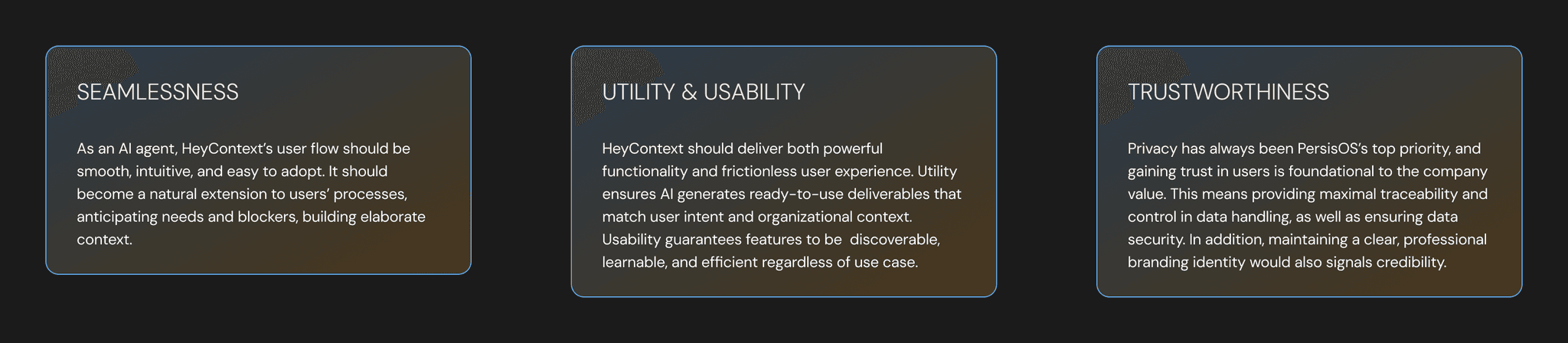
Based on user research, competitive analysis, and company mission, we established 3 core values to guide design decisions and product development.
Synthesis
Based on user research, competitive analysis, and company mission, we established 3 core values to guide design decisions and product development.
Design System
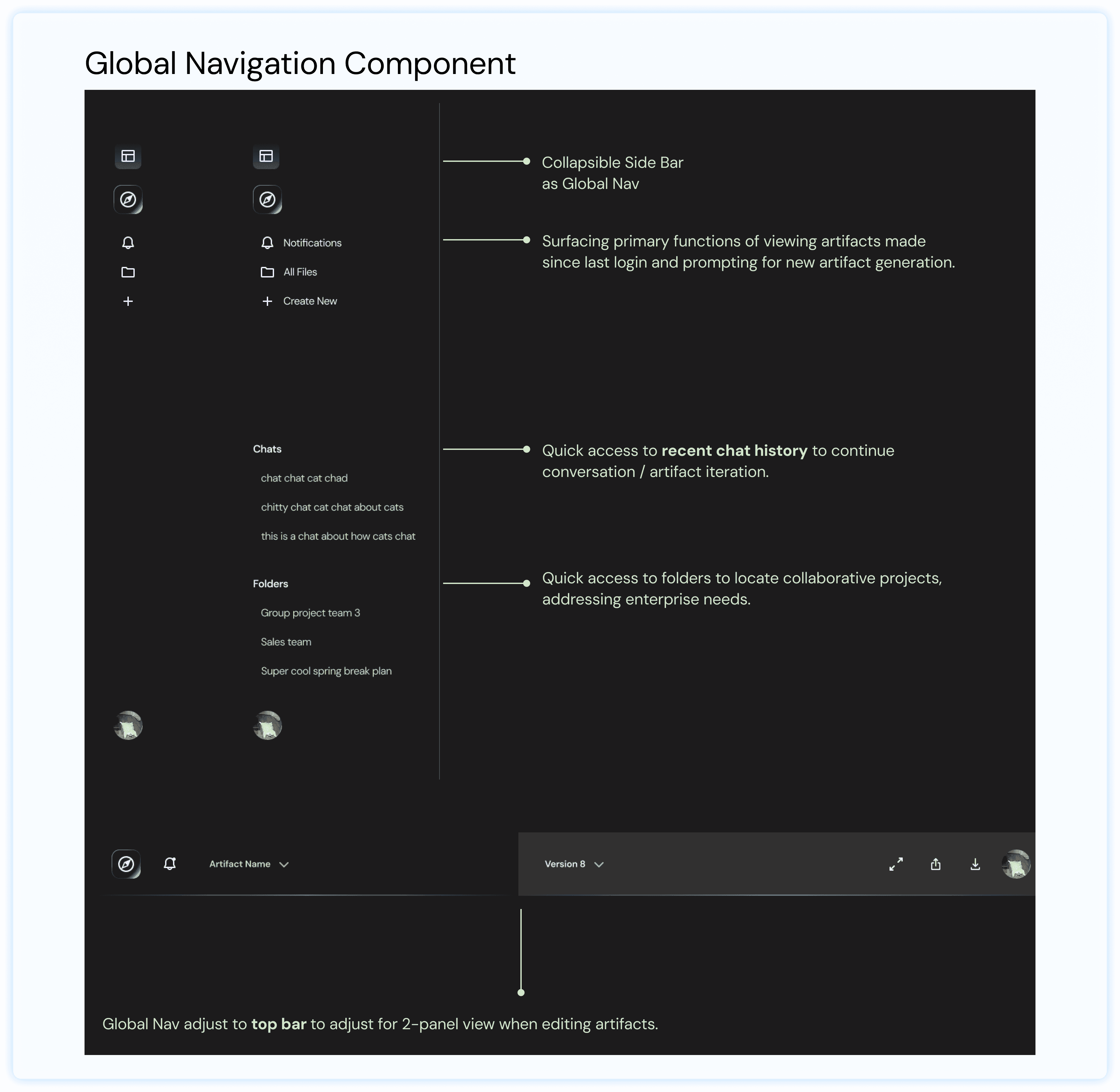
With this in mind, we introduced a new design system intended as a critical framework to accelerate development, align cross-functional teams, and enable incremental, systemic implementation of the redesign.
Scalable Component Library (140+ Elements) & Style Specifications: Established an extensible system of reusable components and visual patterns that empowers designers and developers to build with better efficiency.
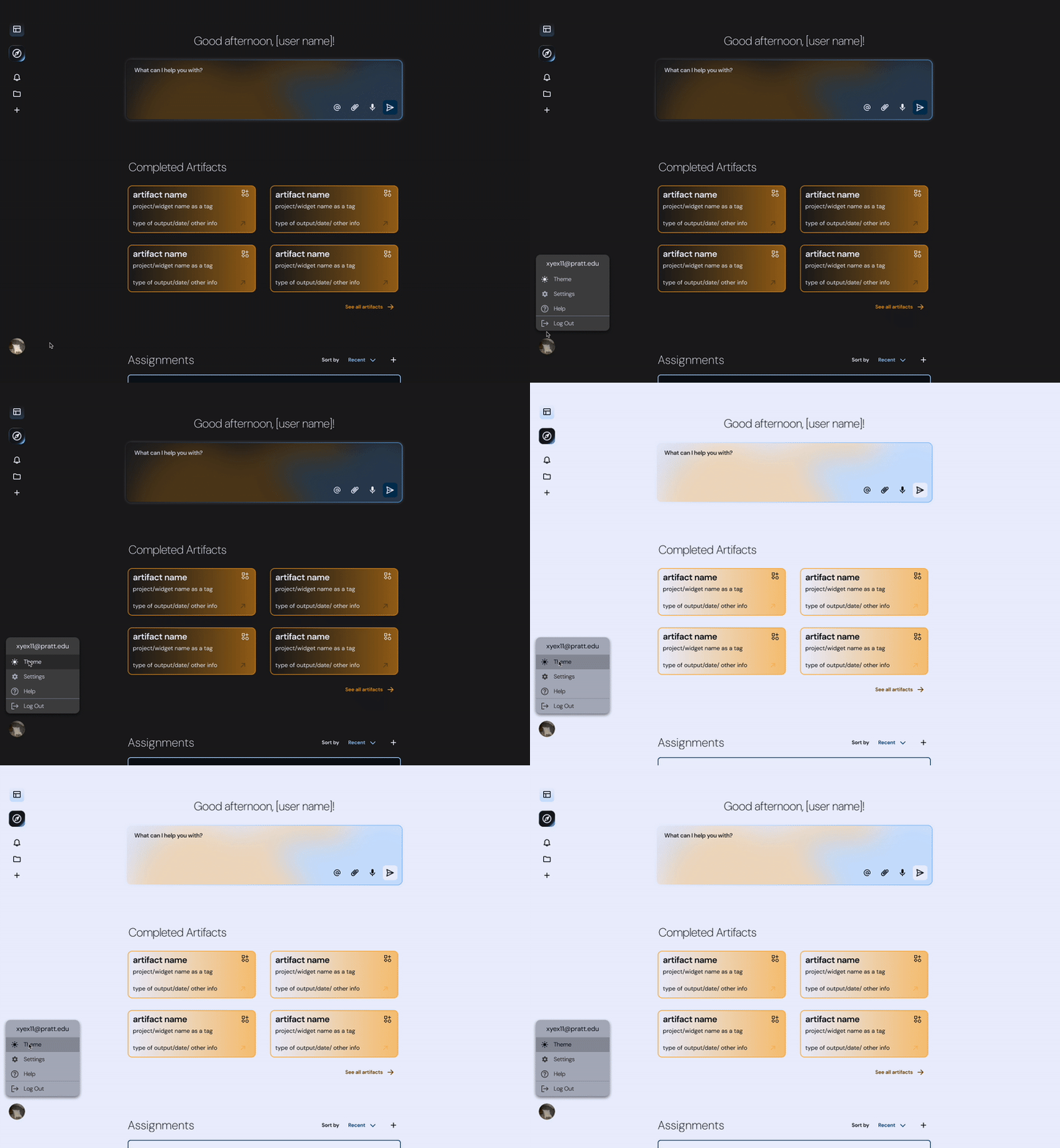
Variable Collections & Design Tokens: Token-based architecture with native light/dark modes, establishing a single source of truth for design decisions and ensuring design-development consistency.
Design System
With this in mind, we introduced a new design system intended as a critical framework to accelerate development, align cross-functional teams, and enable incremental, systemic implementation of the redesign.
Scalable Component Library (140+ Elements) & Style Specifications: Established an extensible system of reusable components and visual patterns that empowers designers and developers to build with better efficiency.
Variable Collections & Design Tokens: Token-based architecture with native light/dark modes, establishing a single source of truth for design decisions and ensuring design-development consistency.
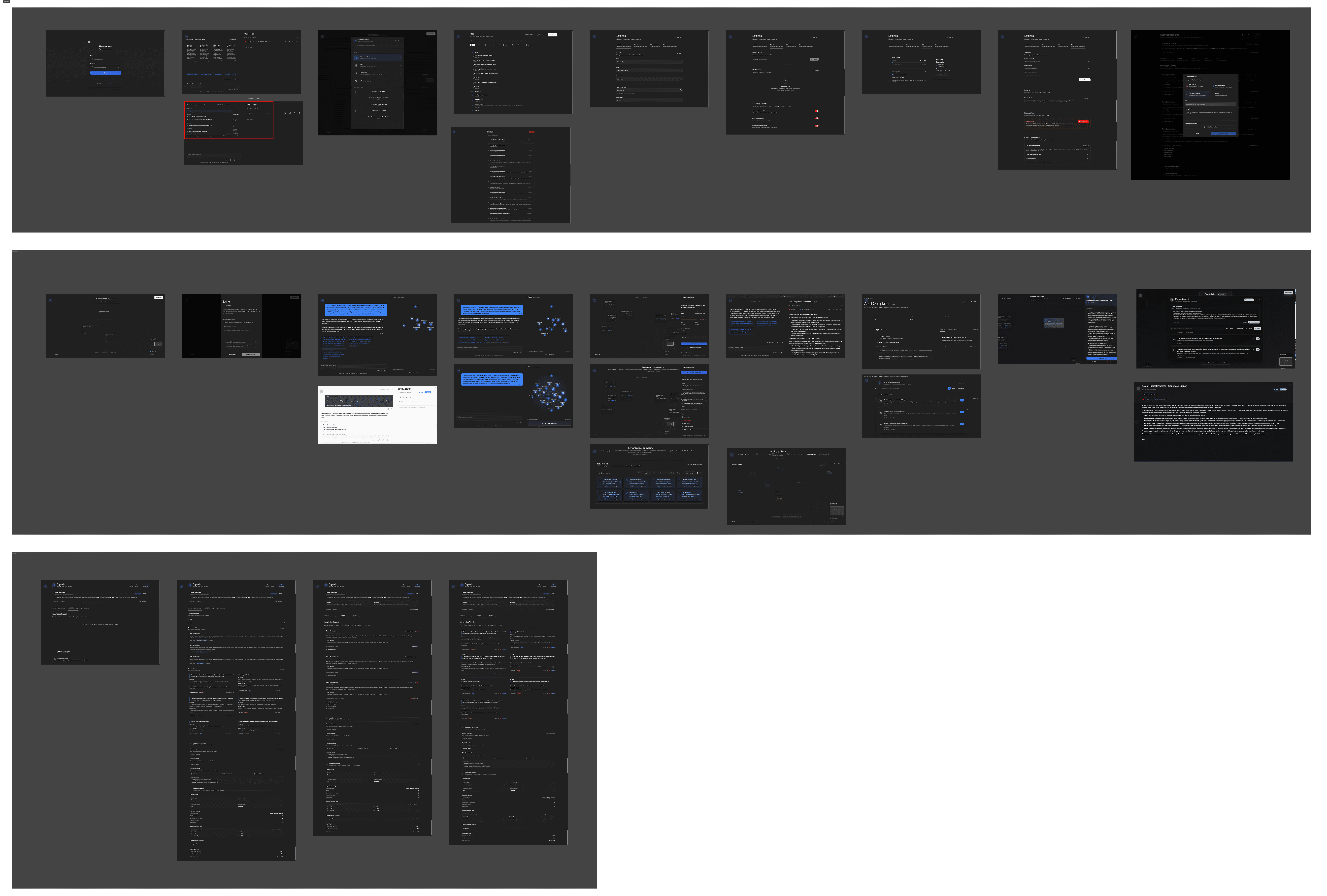
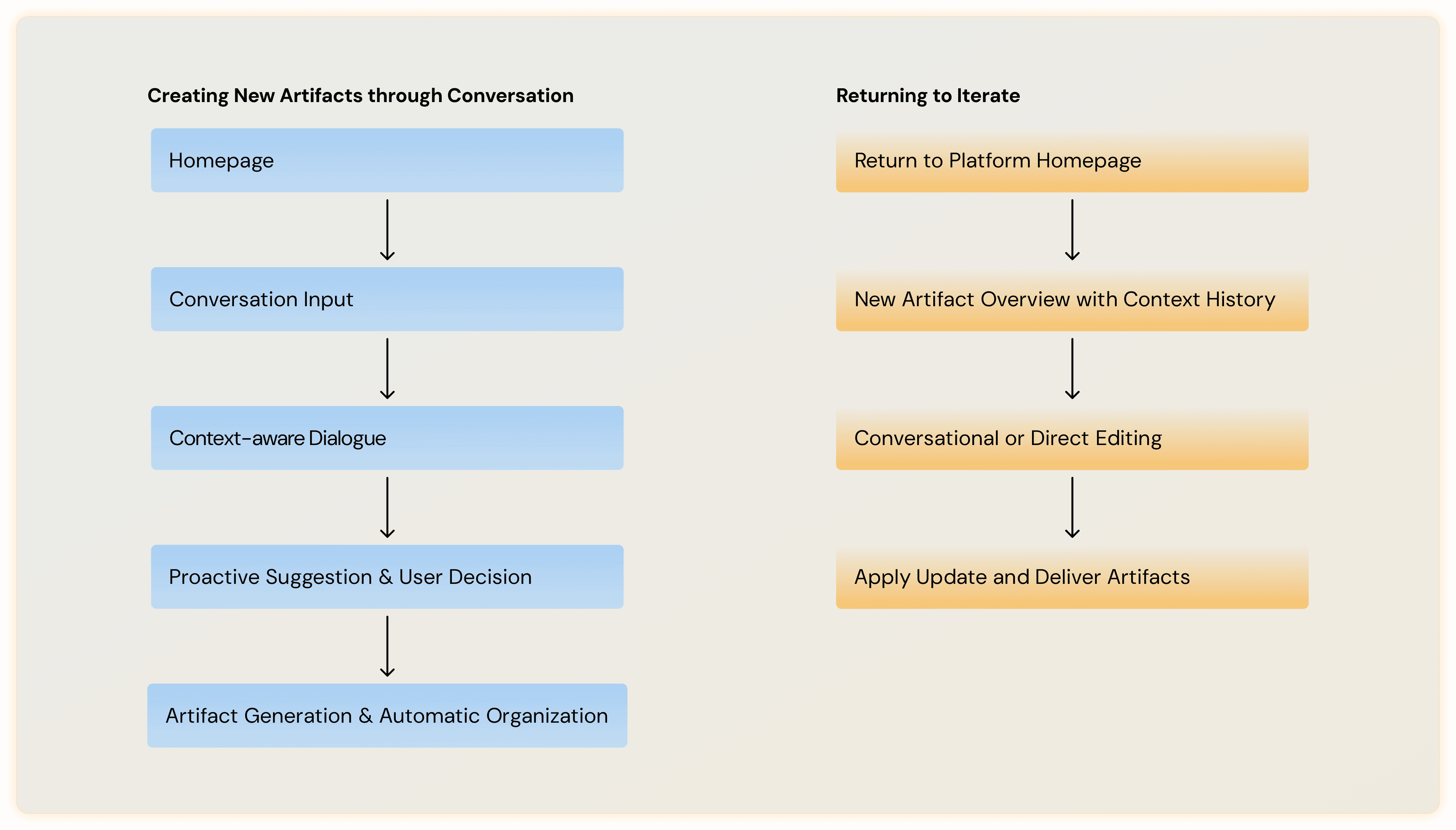
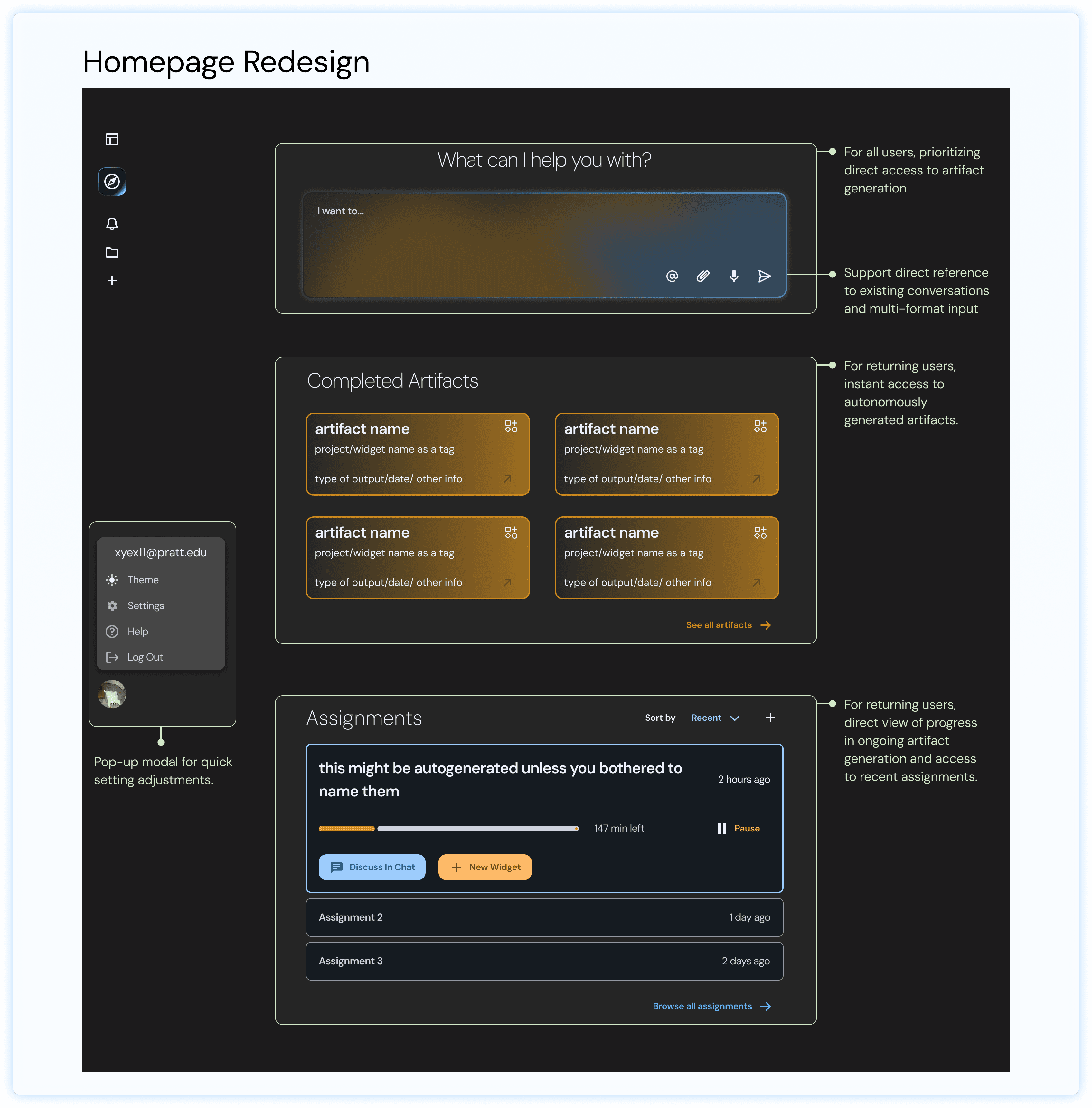
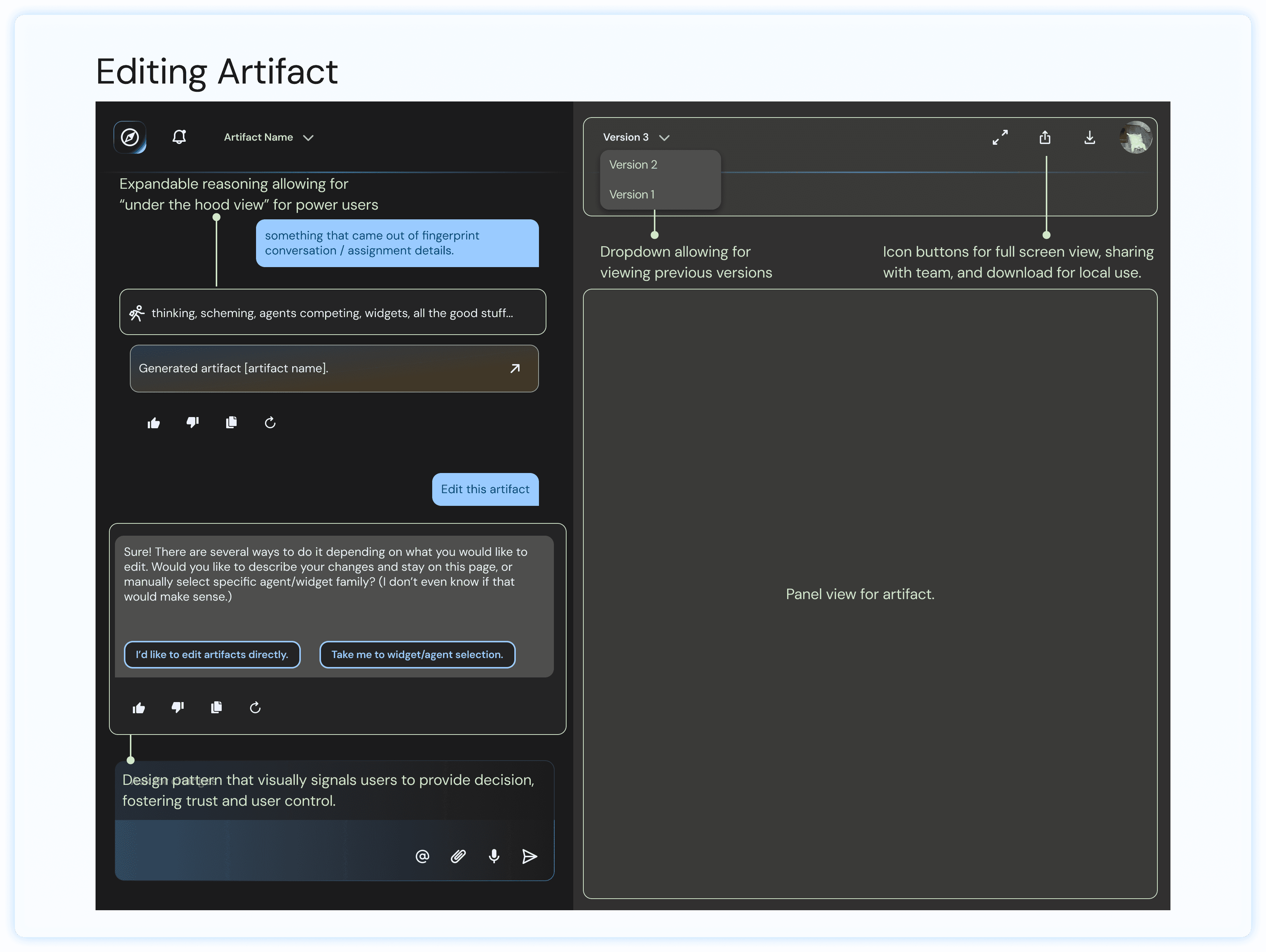
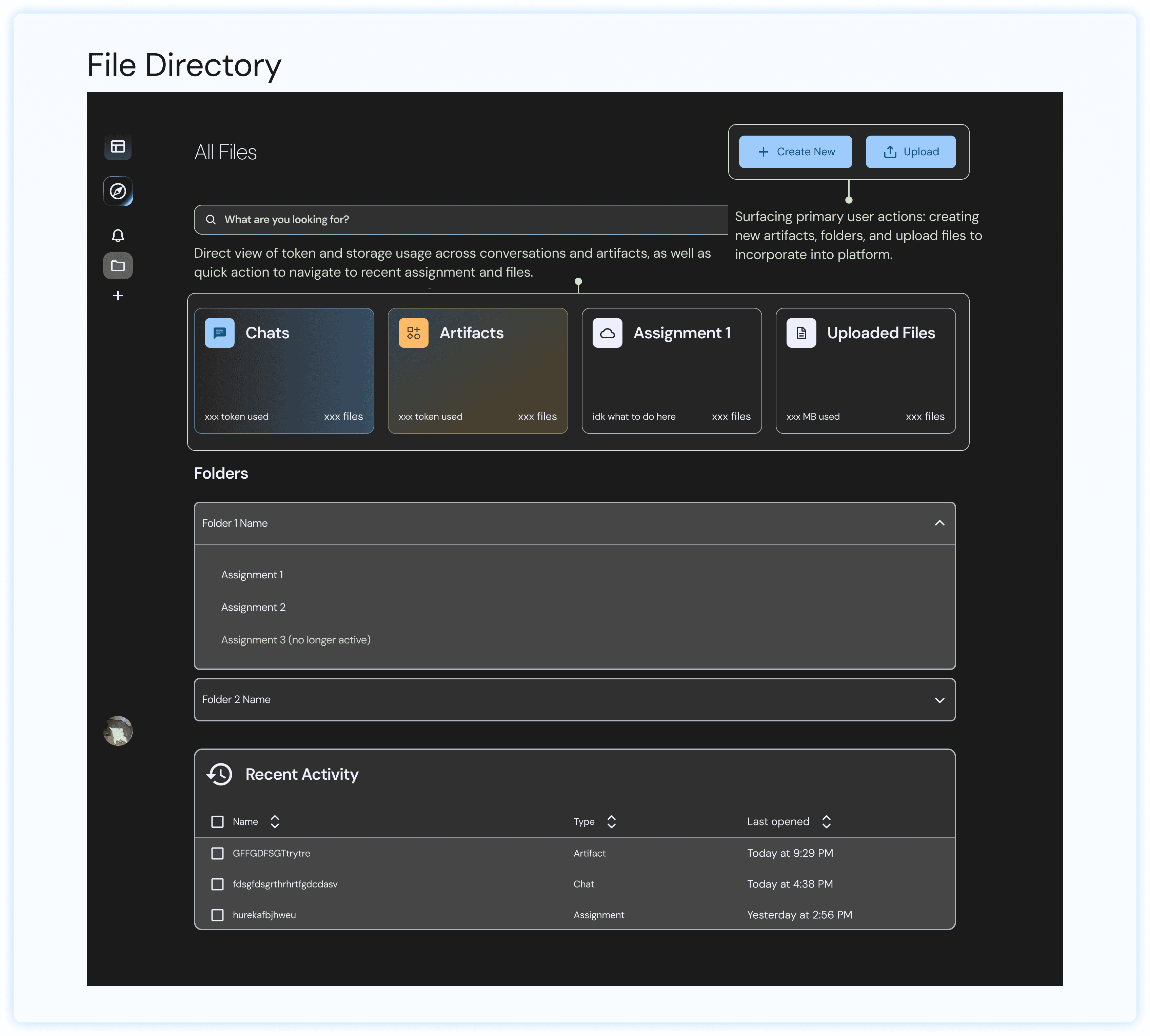
Parallel to UI kit and design pattern creation, we also produced high-fidelity prototypes for the two core user journeys: artifact creation via conversation and context-preserved editing upon return.
Parallel to UI kit and design pattern creation, we also produced high-fidelity prototypes for the two core user journeys: artifact creation via conversation and context-preserved editing upon return.
Design Highlights
Handoff & Implementation
Delivered Figma file including Design System UI kit and high fidelity prototypes, established a phased rollout strategy facilitated by Figma MCP.
Exploring Figma Make to optimize implementation efficiency and ensure accurate translation between design specifications and code implementation.
Handoff & Implementation
Delivered Figma file including Design System UI kit and high fidelity prototypes, established a phased rollout strategy facilitated by Figma MCP.
Exploring Figma Make to optimize implementation efficiency and ensure accurate translation between design specifications and code implementation.
Key Learnings:
⚙️ Implementation & Design
My first in-house designer experience sharpened my understanding of how product design operates within a tech startup, and why implementation and product thinking are just as important.
🌱 AI Design Patterns
Even Microsoft Copilot and Gemini are still iterating on UX patterns for AI. Our research-driven approach produced solutions that competed favorably. No pattern is sacred (yet) at this stage of the industry.
💬 Proactive Communication
Remote, self-paced work taught me that proactive check-ins are simply necessary: they consistently uncovered collaboration opportunities that wouldn't have emerged otherwise.
Key Learnings:
⚙️ Implementation & Design
My first in-house designer experience sharpened my understanding of how product design operates within a tech startup, and why implementation and product thinking are just as important.
🌱 AI Design Patterns
Even Microsoft Copilot and Gemini are still iterating on UX patterns for AI. Our research-driven approach produced solutions that competed favorably. No pattern is sacred (yet) at this stage of the industry.
💬 Proactive Communication
Remote, self-paced work taught me that proactive check-ins are simply necessary: they consistently uncovered collaboration opportunities that wouldn't have emerged otherwise.
A heartfelt thank you to everyone at PersistOS! I hope to continue contributing to HeyContext and learning from this incredible group of builders.
A heartfelt thank you to everyone at PersistOS! I hope to continue contributing to HeyContext and learning from this incredible group of builders.